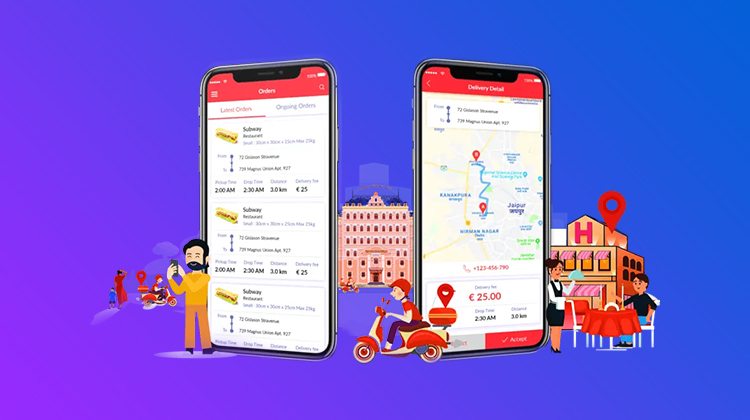
The delivery app landscape has matured significantly, and 2026 demands a new standard of functionality. Users now expect sophisticated features that go beyond basic ordering and tracking. These seven essential features distinguish exceptional delivery apps from mediocre competitors.
1. AI-Powered Personalized Recommendations
Modern delivery apps employ machine learning algorithms that analyze individual user behavior to predict preferences and suggest meals users are most likely to order. These systems consider purchase history, time of day, weather conditions, seasonal preferences, and even mood patterns derived from ordering times. When users open the app, the personalized feed immediately surfaces dishes and restaurants tailored to their specific tastes rather than generic top-rated options.
The sophistication of these recommendation engines significantly impacts user engagement and order frequency. Apps with advanced AI recommendations see higher average order values (AOV) and increased repeat orders compared to apps relying on static content. Approximately 52% of consumers actively seek personalized recommendations, indicating strong user preference for this feature. The most effective implementations learn from implicit signals (which items users view but don’t order, how long they browse specific restaurants) alongside explicit data (past orders, favorite items).
Beyond meal recommendations, AI predicts optimal timing—suggesting Indian food on Monday evenings when users typically crave it, or breakfast items on Saturday mornings. This contextual intelligence eliminates friction by eliminating the need for users to think about what they want; the app simply presents the right option at the right moment.
2. Seamless Real-Time Order Tracking with Interactive Maps
Real-time order tracking has evolved from a nice-to-have to an absolute requirement. Users expect live GPS visibility of their order’s journey from restaurant acceptance through driver pickup to arrival at their doorstep. The most effective implementations display order status through multiple channels simultaneously: interactive maps showing driver location, text status updates (“Order being prepared,” “Out for delivery”), and push notifications at each stage.
Interactive map displays demonstrate the driver’s real-time location, remaining distance, estimated arrival time, and route details. Rather than static status updates, sophisticated apps update ETAs dynamically as conditions change, accounting for actual traffic patterns and driver behavior. This transparency builds trust by ensuring customers never feel uncertain about their order’s whereabouts.
Beyond passenger-facing tracking, advanced systems provide visibility into the entire order lifecycle: time from order placement to restaurant acceptance, kitchen preparation duration, driver pickup time, and delivery duration. This granular visibility helps users understand where delays occur and informs future ordering decisions. Some platforms enable direct communication with drivers through the tracking interface, allowing customers to specify delivery instructions without phone calls.
3. Comprehensive Search and Filtering Capabilities
Food cravings are specific, and delivery apps must enable rapid discovery through multiple search dimensions. Advanced search functionality should support cuisine type filtering (Indian, Italian, Mexican), dietary restrictions (vegan, keto, gluten-free, halal), delivery time windows, price ranges, ratings, and specific ingredients or dishes. The most effective implementations combine keyword search with intelligent filtering that prevents overwhelming result sets.
Smart filtering reduces the decision paralysis that occurs when users are presented with hundreds of restaurant options. Instead of browsing endlessly, users can narrow results by “Delivered in under 30 minutes,” “Top rated today,” “Best value,” or “Currently open”. Multi-level filtering enables increasingly specific searches: first by cuisine, then by price, then by delivery time, progressively narrowing options until users find the perfect choice.
Search history and saved filter combinations further enhance efficiency for returning users who regularly filter by identical criteria (e.g., “vegan restaurants, under 30 minutes, under $15”). Voice search capabilities enable hands-free discovery for users multitasking or driving.
4. Frictionless One-Tap Checkout with Multiple Payment Options
Checkout represents the critical conversion point. Apps must minimize friction by enabling order completion in under two minutes through streamlined flows that eliminate redundant data entry. Returning users should encounter prefilled payment methods and delivery addresses, allowing genuine one-tap checkout for frequently repeated orders.
Payment flexibility is essential—apps should support credit cards, digital wallets (Google Pay, Apple Pay), UPI, PayPal, buy-now-pay-later services, and cash-on-delivery for users in markets where digital payment adoption is still growing. Secure payment gateways with fraud detection protect user data at every transaction step. Clear payment processing feedback prevents users from wondering whether transactions completed successfully.
For returning customers with established order patterns, “Reorder with one tap” buttons that instantly repurchase previous orders dramatically reduce friction and increase conversion. This feature proves particularly powerful for regular users who consistently order identical meals.
5. Accessibility and Inclusive Design Features
Accessibility represents both an ethical imperative and a competitive advantage in 2026. Delivery apps should support screen readers (iOS VoiceOver, Android TalkBack) for visually impaired users, enabling full app navigation through audio feedback. High color contrast between text and backgrounds ensures readability for users with low vision. Resizable fonts and support for dynamic type scaling accommodate varied visual abilities.
Voice ordering functionality enables hands-free ordering for users with mobility impairments or those multitasking (driving, cooking, caring for children). Voice ordering systems should support natural language processing, understanding conversational orders like “I’d like a large pizza with extra cheese and no onions”. These systems benefit not just users with disabilities but also busy professionals and multitasking parents.
Keyboard navigation should work throughout the app, allowing users unable to use touchscreens to navigate effectively. Touch targets (buttons, links) should be sufficiently large (minimum 48×48 pixels) to accommodate users with motor impairments. For users with cognitive impairments, clear language, logical content organization, and predictable navigation reduce cognitive load.
Captions and transcripts for video content (restaurant promotional videos, cooking demonstrations) support users with hearing impairments. Haptic feedback (subtle vibrations) provides tactile confirmation for actions without requiring visual feedback.
6. Intelligent Loyalty and Rewards Programs
Modern loyalty programs transcend simple point accumulation. The most effective 2026 programs employ tiered rewards systems where customers unlock progressively better benefits as engagement increases, creating aspirational goals that drive retention. Swiggy Super and Amazon Prime demonstrate this approach: for fixed monthly fees, members receive unlimited free delivery, surge pricing discounts, and exclusive offers.
Gamification elements boost engagement by making loyalty feel like interactive play rather than transactional earning. Spin-the-wheel bonuses, milestone celebrations, and achievement badges create moments of delight. Personalized rewards that match individual preferences (offering coffee credits to users who frequently order beverages, vegetarian meal discounts to vegetarian users) prove more valuable than generic rewards.
Sustainability-aligned rewards represent a growing dimension—apps can reward users for choosing eco-friendly packaging, slower delivery windows, or ordering from sustainable restaurants. Referral programs incentivizing users to invite friends through exclusive bonuses create network effects that drive acquisition.
The most sophisticated programs integrate across channels: points earned in-app synchronize with in-store purchases or partner brands, creating seamless omnichannel loyalty. Integration with digital wallets enables immediate redemption without friction.
7. Sustainability and Environmental Impact Transparency
Consumer consciousness around environmental impact has become a decision factor in 2026. Leading delivery apps now calculate and display the carbon footprint of delivery options, helping users make eco-conscious choices. Some platforms quantify impact: “Choosing standard delivery instead of express saves 15kg CO₂”. Others reward sustainable choices: users selecting eco-friendly packaging or slower delivery receive points redeemable for discounts.
Sustainability transparency extends to restaurant and delivery partner features. Apps highlight restaurants using sustainable sourcing or packaging, helping environmentally conscious users align purchases with values. Carbon accounting systems track cumulative environmental impact from an individual user’s ordering history, creating awareness and enabling performance comparisons with other users.
Delivery method alternatives represent another critical dimension. Apps should highlight sustainable delivery options like cargo bikes, electric vehicle deliveries, or local pickup points that consolidate multiple orders into single trips. Some platforms display estimated delivery times and emissions for each option, enabling informed choice. Eco.me (Ele.me’s sustainability initiative) pioneered “e-Carbon” accounts that track and reward users for low-carbon choices like “no cutlery” orders.
Partnership with green-certified carriers or commitment to electric vehicle fleet adoption demonstrates institutional commitment to sustainability. Click-and-collect options that shift customers from delivery to pickup reduce last-mile emissions while boosting in-store engagement.
Additional Critical Features Worth Monitoring
Beyond these core seven, several emerging features are rapidly becoming expected:
Advanced customer support with AI chatbots: 24/7 AI-powered chat handling 80% of routine inquiries (missing items, order delays, refunds) instantly while escalating complex issues to humans seamlessly. Users increasingly expect immediate support without waiting for human agents.
Dark mode and eye-friendly design: Approximately 50-70% of mobile users enable dark mode when available. Dark mode reduces eye strain during evening use (when food delivery peaks) and improves battery life on OLED devices.
Order history with intelligent reordering: Complete order history enabling single-tap reordering of entire previous meals or selective item reordering without duplicating entire orders.
Multiple saved addresses: Users should save home, work, and other frequent locations, selecting delivery addresses with one tap.
Smart notifications: AI-driven push notifications timed for maximum engagement without annoying frequency. Personalized offers based on individual preferences and behavior patterns drive higher redemption than generic promotions.
Integration with smart home devices and voice assistants: Seamless ordering through Alexa, Google Home, or other voice assistants enables integration into smart home ecosystems.
Implementation Priority Framework
Delivery platforms should prioritize implementations strategically. Essential foundations include minimalist navigation, high-quality food imagery, seamless checkout, and real-time tracking—absolute requirements that users take for granted. Secondary implementations like AI personalization, comprehensive accessibility, and sustainability features should follow core functionality, as these drive competitive differentiation and user satisfaction.
The most successful delivery apps in 2026 will seamlessly balance aesthetic appeal with functional usability, delivering experiences that feel intuitively designed for each individual user while maintaining the technical performance standards that have become table stakes. Apps excelling across these seven dimensions—personalization, tracking, search, checkout, accessibility, loyalty, and sustainability—will capture disproportionate market share from competitors relying on outdated feature sets.