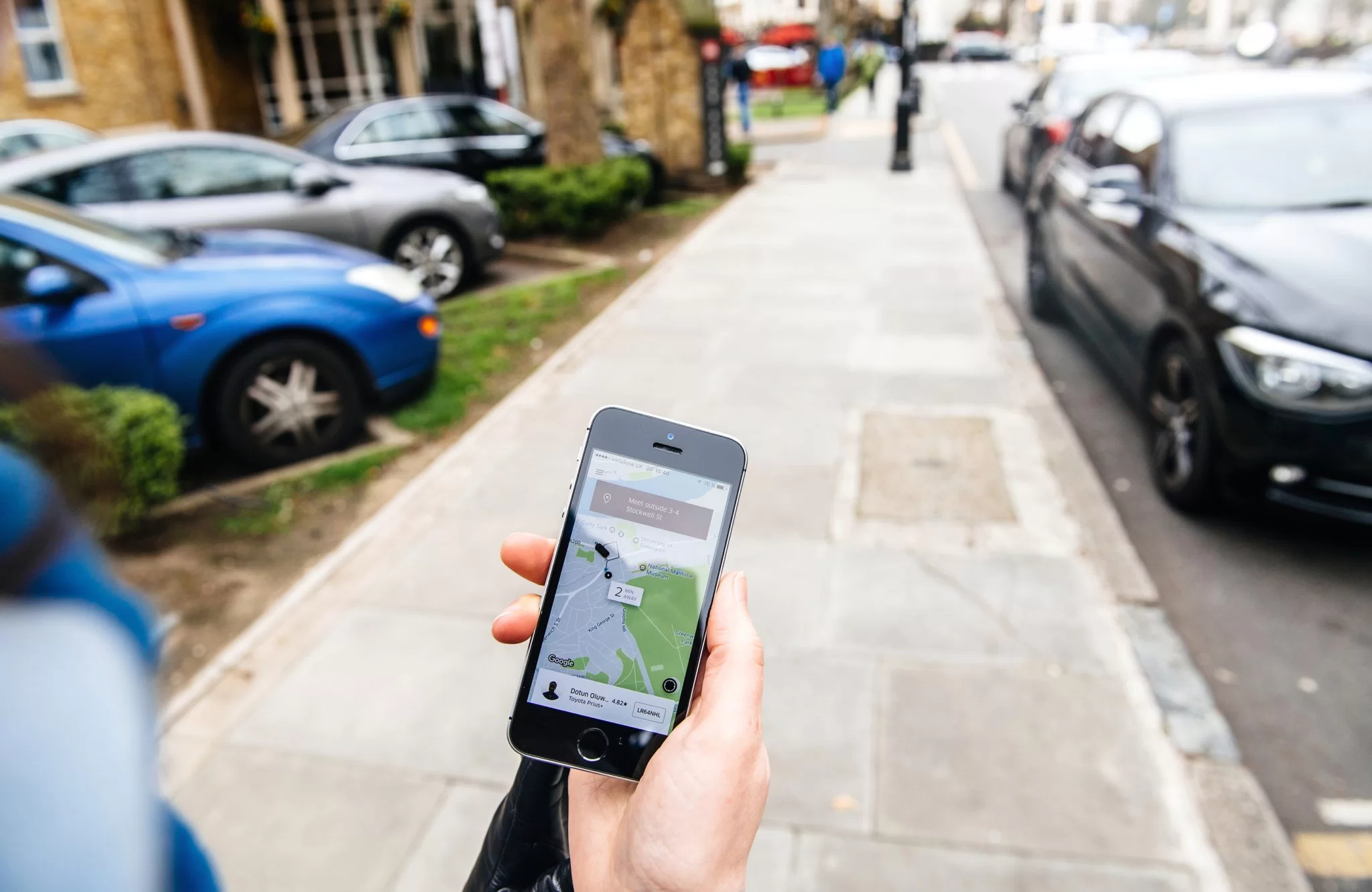
Ride-sharing services have fundamentally transformed urban transportation, but their environmental consequences are far more complex and concerning than initially anticipated. Rather than reducing emissions, current ride-hailing operations often increase pollution through mechanisms that extend beyond simple vehicle operation.
The Emissions Paradox: More Pollution Than Alternatives
The most troubling finding from recent environmental research reveals that ride-hailing trips generate substantially more climate pollution than the transportation alternatives they displace. Non-pooled ride-hailing trips result in an estimated 69% more climate pollution on average than the modes people would have otherwise used. This represents a fundamental failure of the industry to deliver on its environmental promise. When measured against private car trips, a solo ride-hailing trip emits approximately 47% more greenhouse gas emissions than a private vehicle of average fuel efficiency.
The severity of this impact becomes apparent when considering what transportation modes ride-hailing actually replaces. In cities with robust public transportation systems, ride-hailing predominantly displaces walking, biking, and transit usage rather than substituting for personal vehicle ownership. Since public transit, cycling, and walking produce zero or near-zero emissions, replacing these modes with vehicle-based ride-hailing creates net increases in total urban emissions. In regions with lower public transit availability, ride-hailing’s impact is more neutral, as it more directly substitutes for personal vehicle trips.
The Deadheading Problem: Empty Miles and Wasted Emissions
The primary driver of ride-hailing’s environmental inefficiency is “deadheading”—the distance traveled without passengers. Ride-hailing drivers spend approximately 42% of their service time either waiting for rides or traveling to pick up passengers. Across all ride-hailing vehicles, between 35% and 50% of total distance traveled is deadheading, with some studies estimating that in specific cities, empty running comprises up to 40-81% of total vehicle miles traveled.
This empty running substantially increases emissions because vehicles consume fuel and produce pollution regardless of occupancy. The deadheading phenomenon alone accounts for approximately 32% of lifecycle emissions from ride-hailing services. Unlike a personal car trip where the owner absorbs all emissions for one passenger, or public transit where emissions are distributed across 40-60 passengers, ride-hailing vehicles generate emissions during both paid and unpaid mileage, dramatically reducing their per-passenger efficiency.
Research from specific cities illustrates the magnitude of this impact. In San Francisco, where ride-hailing has achieved unusually high market penetration, Uber and Lyft vehicles represent approximately 13.4% of all vehicle miles traveled despite accounting for a much smaller share of trips. This disparity directly results from excessive deadheading as drivers search for the next fare. San Francisco experienced a 2.21% increase in greenhouse gas emissions and a 1.38% increase in vehicle miles traveled directly attributable to ride-hailing introduction.
Traffic Congestion and Induced Demand
Ride-hailing services paradoxically increase total vehicle miles traveled despite promising ride-sharing efficiency. Studies indicate that ride-hailing adds approximately 2.6 additional miles of vehicle travel for each mile of personal driving it replaces. This occurs through multiple mechanisms: drivers deadheading between passengers, riders taking trips they wouldn’t otherwise make due to convenience, and vehicles cruising for passengers while the app is active.
This induced demand creates substantial environmental consequences through congestion. Additional vehicle traffic increases fuel consumption and emissions, air pollution, and infrastructure strain. The environmental impact extends beyond direct emissions, as congestion delays increase overall journey times, meaning vehicles consume fuel for extended periods. In major metropolitan areas, ride-hailing now represents 1-3% of total vehicle miles traveled overall, but in dense urban centers like New York City, this figure reaches up to 50% of traffic during peak hours.
Modal Displacement: The Transit Cannibalization Problem
Perhaps the most environmentally damaging aspect of ride-hailing is its systematic displacement of sustainable transportation modes. Research across 42 U.S. metropolitan areas demonstrates that when Uber enters a market, public transit ridership declines significantly. This represents a critical environmental failure because public transit produces approximately one-third the emissions of ride-hailing services per passenger mile.
The modal displacement problem is particularly acute in cities with strong transit systems. In cities where most residents use public transportation, walking, or cycling, ride-hailing shifts the baseline toward less sustainable transportation. Ride-hailing also reduces cycling and walking for first-mile/last-mile connections, potentially discouraging public transit usage altogether when it becomes unreliable due to reduced demand. This creates a self-reinforcing cycle where ride-hailing reduces public transit ridership, leading transit agencies to reduce service, making transit less attractive and pushing more users toward ride-hailing.
Electric Vehicles: Limited Solution Without Structural Changes
The ride-hailing industry has begun investing in electric vehicle adoption as a primary environmental strategy. Uber has committed to net-zero emissions by 2040, with goals for 50% of kilometers in seven major European cities to be in electric vehicles by 2025. Lyft and Go-Jek plan completely emissions-free operations by 2030. California’s Clean Miles Standard requires 90% of ride-hailing miles to occur in zero-emission vehicles by 2030.
While electric vehicle adoption reduces tailpipe emissions, it addresses only one component of ride-hailing’s environmental problem. Electrification alone reduces emissions by approximately 84%, but this still leaves significant impacts from deadheading and induced demand. A pooled ride-hailing trip in an electric vehicle emits nearly the same amount per passenger as a private car ride, far higher than public transit. Additionally, electric vehicle production carries substantial upstream emissions, and electrification does nothing to address the fundamental issue of additional vehicle miles traveled and traffic congestion.
Research indicates that even with complete electrification and 50% pooling rates, ride-hailing would still produce 52% higher emissions than the transportation modes it displaces. Without addressing modal displacement and induced demand, electrification represents a partial rather than comprehensive environmental solution.
The Pooling Opportunity: Underutilized and Insufficient
Pooled ride options like UberX Share and Lyft Line offer substantially lower emissions per passenger. A pooled ride-hailing trip generates approximately 79% lower emissions than non-pooled rides. However, pooling remains dramatically underutilized—only 15% of all U.S. ride-hailing trips are pooled. This low adoption reflects consumer preferences for privacy and convenience over environmental considerations, creating a fundamental market failure where individual incentives diverge from environmental benefits.
Even if pooling were maximized, it would not fully resolve environmental concerns. Pooled rides still increase overall vehicle miles traveled through induced demand and deadheading, and they continue displacing public transit usage. A pooled ride-hailing trip remains substantially less efficient than public transit, which operates with fixed routes and schedules optimized for passenger volume.
Market Scale and Geographic Variation
The overall national environmental impact of ride-hailing has remained relatively modest to date—approximately 0.14% increase in CO2 emissions and 0.08% increase in vehicle miles traveled—because ride-hailing currently represents less than 1% of all trips nationally. However, this aggregate figure masks dramatic variation across cities and regions. Dense urban areas with strong public transit systems experience disproportionately negative environmental impacts, while car-dependent regions see negligible or slightly positive effects.
This geographic variation has critical policy implications. Cities with the most developed alternatives to driving—precisely the areas with the strongest climate commitments—are experiencing the worst environmental impacts from ride-hailing. Conversely, ride-hailing’s impact in sprawling, car-dependent areas is minimal because it more directly substitutes for personal vehicles rather than displacing transit.
Policy Solutions and Strategic Interventions
Addressing ride-hailing’s environmental impacts requires multifaceted policy approaches beyond simple vehicle electrification. Cities are implementing several complementary strategies:
Regulatory caps on vehicle supply: Some jurisdictions have implemented or proposed caps on the number of ride-hailing vehicles allowed to operate, directly limiting induced demand.
Pooling mandates: Several cities have proposed requirements that ride-hailing companies increase the percentage of pooled rides through incentives, penalties, or service restrictions.
Integration with transit: Cities are working to position ride-hailing as a first-mile/last-mile connector to public transit rather than a substitute, ensuring it complements rather than cannibalizes transit usage.
Congestion and emissions pricing: London and other cities charge ride-hailing vehicles higher congestion pricing to internalize environmental costs.
Zero-emission requirements: Multiple cities and regions have implemented timelines requiring ride-hailing fleets to transition to zero-emission vehicles, with the strictest requirements in cities with the highest environmental concerns.
The Optimistic Scenario: Structural Requirements for Positive Outcomes
Research indicates that ride-hailing could theoretically contribute to climate change mitigation if three conditions are met simultaneously: complete transition to zero-emission vehicles, conversion of at least 50% of trips to pooled rides, and deliberate policy integration with public transit to prevent modal displacement. However, achieving all three conditions simultaneously remains difficult. Market incentives push toward non-pooled premium services that generate higher driver earnings and company revenues. Consumers prefer the convenience and privacy of solo rides. And cities struggle to enforce modal integration while private companies optimize for profit maximization.
Comparative Environmental Context
The transportation sector contributes approximately 23% of global CO₂ emissions, with road transportation comprising the largest portion. Within this context, ride-hailing services have become increasingly significant. The industry’s rapid growth—from Uber’s first ride in 2010 to over 10 billion Uber trips and 1 billion Lyft trips accumulated globally by 2018—demonstrates that ride-hailing represents a substantial and growing share of urban mobility.
Ride-hailing’s environmental impact ultimately reflects a fundamental tension in transportation policy: services that maximize individual convenience often minimize environmental benefits. The platforms excel at providing flexible, on-demand transportation tailored to individual preferences. These characteristics make them attractive to consumers but also make them inherently less efficient than the large-scale, fixed-route systems that optimize environmental performance. Until policy frameworks more directly reward pooling, transit integration, and mode shifts toward sustainable alternatives, ride-hailing will continue to increase transportation emissions despite technological improvements in vehicle efficiency.