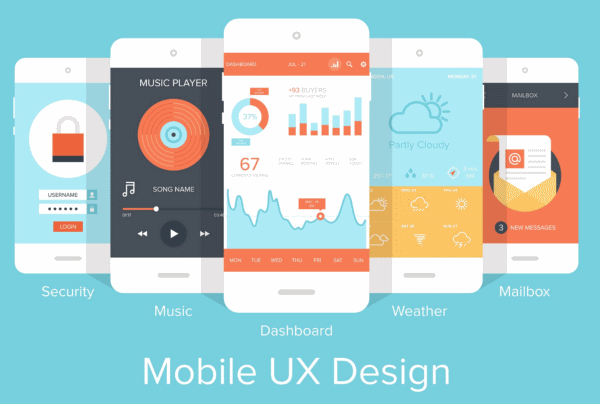
The mobile app landscape for delivery platforms is rapidly evolving, driven by rising user expectations, technological innovations, and competitive pressures. Delivery platforms that fail to adopt current design trends risk losing market share to competitors who deliver superior experiences. The most successful platforms in 2025-2026 share common design principles centered on personalization, performance, accessibility, and seamless user interactions.
Hyper-Personalization Through AI and Machine Learning
The most transformative trend reshaping delivery app design is hyper-personalization powered by artificial intelligence and machine learning. Unlike traditional personalization based on broad user segments, modern delivery apps employ real-time, contextual personalization that adapts to individual user behavior. Approximately 80% of consumers are more likely to engage with services offering personalized experiences, and this preference is particularly pronounced in the competitive delivery market.
Effective AI-driven personalization in delivery apps operates across multiple dimensions. Machine learning algorithms analyze user purchase history, browsing patterns, time of day preferences, location data, and even dietary preferences to generate tailored restaurant and meal recommendations. For example, if a user consistently orders breakfast items in the morning or frequently selects vegan options, the app learns these patterns and proactively surfaces relevant restaurants and dishes before the user searches. Real-time recommendation engines that analyze user interactions continuously update suggestions, ensuring relevance evolves with changing preferences.
The business impact is substantial. Delivery apps implementing sophisticated recommendation systems see increased average order values through intelligent upselling and meal pairing suggestions. Personalization algorithms reduce bounce rates by presenting users with meals they are most likely to crave, eliminating the friction of endless browsing through irrelevant options. Location-based personalization takes this further, suggesting nearby restaurants with short delivery times or promoting special offers based on the user’s current or frequently visited locations.
Voice-activated ordering represents an emerging personalization frontier. Integrating AI-driven recommendation engines with voice assistants enables customers to place orders through voice commands while receiving personalized suggestions hands-free. This modality particularly appeals to users on the go or those preferring touchless interactions.
Minimalist and Intuitive Design Architecture
Modern delivery app design emphasizes simplicity and clarity over feature bloat. Users expect streamlined interfaces that prioritize only essential elements, reducing cognitive load and accelerating decision-making. Research indicates that 88% of users abandon apps due to poor user experience, with cluttered interfaces and confusing navigation being primary culprits. Successful delivery platforms employ minimalist design with clear menus, generous white space, and straightforward navigation patterns that guide users intuitively toward completing orders.
A fixed bottom navigation menu has become the standard UX pattern for delivery apps, with key actions like Home, Search, Orders, and Profile consistently positioned at the bottom where users’ thumbs naturally rest. This thumb-friendly design reduces the need for awkward hand gymnastics while maintaining quick access to core functionality. Beyond bottom navigation, successful apps organize content into clearly labeled sections and categories that prevent users from feeling lost.
Consistency in design elements—colors, fonts, spacing, and interactive components—creates a cohesive experience that users can navigate intuitively without requiring instruction. When design patterns remain predictable across all screens, users develop mental models of how the app works, reducing friction and enabling rapid task completion.
Advanced Search and Filtering Capabilities
Food cravings are inherently specific, and delivery app users typically know exactly what they want. Advanced search functionality addresses this reality by enabling rapid discovery through multiple filtering dimensions. Users should be able to filter by cuisine type, dietary restrictions (vegan, gluten-free, halal), delivery time estimates, price range, ratings, and specific ingredients or dishes.
The most effective search implementations combine keyword search with contextual filtering. Instead of requiring users to scroll through hundreds of restaurants after searching, smart filtering allows users to narrow results by “Delivered in under 30 minutes,” “Top rated,” or “Currently open”. This control accelerates decision-making and improves satisfaction by helping users quickly find options matching their specific criteria.
Search history and saved searches further enhance efficiency for returning users. Allowing users to repeat previous searches or save custom filter combinations reduces friction on repeat visits.
High-Quality Visual Content and Interactive Menus
Food is inherently visual, and delivery app design must accommodate this reality. Restaurant menus should feature high-quality food photography that makes items appear appetizing and encourages ordering. Images should load quickly despite limited bandwidth conditions, requiring optimization through compression techniques and adaptive formats like WebP and AVIF.
Beyond static images, modern delivery apps increasingly incorporate interactive menu elements that enhance engagement. Detailed ingredient lists, nutritional information, allergy warnings, and customization options should be readily accessible from the menu view. Some platforms are experimenting with augmented reality (AR) visualization that allows users to view meals in three-dimensional form on their devices before ordering, helping customers make informed decisions about portion sizes and presentation. This AR-enhanced menu experience reduces return rates and order dissatisfaction by eliminating surprises.
Visual consistency and branding through menu design is critical. Menus should use the delivery platform’s brand colors, typography, and visual hierarchy consistently across all restaurant listings.
Streamlined and Friction-Free Checkout
The checkout process represents the most critical conversion point in delivery app design. Even perfectly designed app experiences fail if checkout is slow, confusing, or requires excessive data entry. Users expect to complete orders in under two minutes for straightforward transactions.
Best-practice checkout implementations include prefilled payment methods and delivery addresses for returning users, eliminating redundant data entry. One-touch checkout for repeat orders—”Reorder with one tap”—dramatically reduces friction for common orders. Clear payment options including digital wallets, credit cards, and emerging alternatives like buy-now-pay-later should be readily available.
Progress indication throughout checkout helps users understand where they are in the transaction flow and how many steps remain. Real-time validation of information prevents rejected payments or address issues at the critical checkout moment.
Real-Time Tracking and Transparent Delivery Status
Delivery apps must provide comprehensive visibility into order status throughout the fulfillment journey. Users increasingly expect real-time order tracking with live maps showing driver location and estimated arrival times. Clear status updates—”Order accepted,” “Being prepared,” “On the way”—provide transparency that reduces anxiety and builds trust.
The most successful delivery apps incorporate interactive maps that show the driver’s real-time location, route, and remaining distance. Push notifications at key milestones (order confirmed, preparing, picked up, out for delivery) keep users informed without requiring constant app checking.
Estimated delivery time should be dynamically calculated and updated as conditions change, reflecting actual traffic conditions, kitchen preparation times, and driver availability. Accurate ETAs reduce false expectations and customer frustration.
Accessibility and Inclusive Design
Accessibility represents not merely a compliance obligation but a competitive advantage in 2025-2026. Web Content Accessibility Guidelines (WCAG) principles—Perceivable, Operable, Understandable, and Robust (POUR)—should guide delivery app design from inception. Approximately 15-20% of the global population experiences some form of disability, representing a substantial market segment that accessible design serves effectively.
Key accessibility features include adequate color contrast between text and backgrounds, ensuring readability for users with low vision. Font sizes should be resizable without losing functionality, and apps should support dynamic type scaling to accommodate users with visual impairments. For users unable to see, screen reader compatibility—ensuring iOS VoiceOver and Android TalkBack properly interpret app content—is essential. Alternative text descriptions for all food images and visual elements enable screen reader users to understand menu content.
Beyond visual accessibility, apps should support voice input for searches and ordering, benefiting both users with motor impairments and those preferring hands-free interaction. Keyboard navigation should work seamlessly throughout the app, allowing users unable to use touchscreens to navigate effectively. For users with cognitive impairments, clear and straightforward language, logical content organization, and predictable navigation reduce cognitive load.
Touch targets (buttons, links, interactive elements) should be sufficiently large, typically minimum 48×48 pixels, to accommodate users with motor impairments or those using the app in mobile, low-light conditions. Interactive elements should be properly spaced to prevent accidental selection.
Dark Mode and Eye-Friendly Design
Dark mode adoption has become nearly universal among modern apps, and delivery platforms should support this user preference. Beyond aesthetic appeal, dark mode provides functional benefits: reduced eye strain during evening use, improved battery life on OLED screens, and enhanced readability in low-light conditions. Approximately 50-70% of mobile users enable dark mode when available, representing a substantial portion of delivery app users ordering during evening hours.
Effective dark mode implementation extends beyond inverting colors. Successful implementations use softer color schemes with reduced brightness contrast, warm color palettes that are easier on the eyes during extended use, and adjusted text sizes optimized for dark backgrounds. High contrast between text and background remains essential for readability in both light and dark modes.
Beyond dark mode, broader eye-friendly design includes configurable text sizes, softer color schemes overall, and reduced animation brightness for users sensitive to bright stimuli.
Microinteractions and Motion Design
Microinteractions—small animations and feedback loops that respond to user actions—significantly enhance perceived responsiveness and delight. When users tap an “Add to Cart” button, immediate visual feedback (button animation, cart icon update, quantity increment) confirms the action completed successfully. Without these microinteractions, apps feel unresponsive and users question whether their actions registered.
Smooth micro-transitions between screens, when properly executed, reduce cognitive disruption as users navigate through the app. Motion should guide attention toward important information without creating distraction. Haptic feedback—subtle vibrations confirming taps, form submission, or order completion—adds tactile confirmation that enhances perceived polish.
However, motion design must be performant. Excessive animations degrade app responsiveness and drain battery, particularly on lower-end devices. Modern best practices implement simplified, optimized animations that enhance rather than hinder user experience.
Voice and Gesture-Based Navigation
Gesture-based navigation is increasingly replacing button-based navigation to maximize screen space and create more intuitive interactions. Swiping, pinching, and dragging replace traditional menu buttons, decluttering interfaces and making interactions feel more natural on touch-first devices. The swipe-to-go-back gesture, implemented consistently across the app, accelerates navigation and reduces reliance on visible back buttons.
Voice navigation and search capabilities enable hands-free interaction essential for accessibility and multitasking scenarios. Users should be able to voice-search for specific restaurants or dishes, place orders via voice commands, and navigate the app using voice control.
Performance Optimization and Lightning-Fast Loading
User tolerance for app slowness has become increasingly low. Apps must launch within 2-3 seconds and achieve 60 frames per second during interactions to feel responsive. Performance optimization requires systematic technical and design approaches working in concert.
Technical strategies include lazy loading (loading only essential content at startup, deferring secondary features), aggressive image optimization through compression techniques and adaptive formats, and intelligent caching of frequently accessed data. Apps should minimize network requests through bundled data transmission and local caching of restaurant menus, pricing, and user preferences. Off-screen content like restaurant menus below the current viewport should load progressively rather than blocking initial page rendering.
Design-optimized performance involves minimalist interfaces that reduce the visual complexity the rendering engine must process. Reducing the number of animations, limiting graphic density, and simplifying visual elements all improve performance. Mobile apps should undergo performance audits identifying bottlenecks and optimizing the slowest 10% of user interactions that disproportionately impact perceived performance.
Different device capabilities demand adaptive design. Budget phones with limited RAM and processing power should receive optimized experiences with simplified animations and reduced image quality, while flagship devices can deliver richer visuals. Testing on real devices of various capabilities ensures consistent responsiveness.
Multi-Platform Synchronization and Cross-Device Continuity
Users increasingly expect seamless continuity across devices. A customer might browse restaurants on their smartwatch, begin ordering on their tablet, and complete checkout on their smartphone, expecting the experience to flow naturally across devices. Modern delivery platforms synchronize order information, saved preferences, and cart contents across smartphones, tablets, smartwatches, and even smart TVs.
Cross-device orchestration ensures that initiating an order on one device and continuing on another maintains context without requiring re-entry of information or restarting workflows. This seamless experience represents a significant competitive advantage in markets where multi-device ownership is common.
Contextual UI Adaptation and Smart Defaults
Smart apps anticipate user needs based on context like time of day, location, and historical behavior. During lunch hours, apps might surface restaurants popular for quick lunch orders. During evening hours, dinner-focused restaurants receive prominence. Apps aware that a user has recently moved to a new location automatically refresh restaurant recommendations based on the new area.
Real-time context awareness extends to network conditions. On slow connections, apps should automatically reduce image quality and prioritize essential information transmission over rich media. Apps running on battery-saving modes should optimize resource consumption.
Social Integration and Community Features
Modern delivery apps increasingly incorporate social elements enabling users to share meal photos, write detailed reviews, and potentially order directly through social platforms. These features expand app reach through word-of-mouth marketing while enhancing user engagement through community interaction.
User-generated content—reviews, ratings, photos from actual customers—builds trust more effectively than professional marketing. Influencer integration tools and mechanisms for easy social sharing amplify visibility and user acquisition.
Sustainable and Eco-Conscious Design
As environmental consciousness rises among consumers, delivery platforms increasingly highlight sustainable options. Apps should clearly identify eco-friendly packaging choices, display carbon impact of delivery options (faster delivery typically requires more fuel), and highlight restaurants committed to sustainability. Gamification of sustainable choices—rewards for selecting eco-friendly packaging or carbon-neutral delivery—encourages adoption.
Implementation Priorities for Platform Developers
Delivery platforms should prioritize implementations strategically based on their current capabilities and competitive positioning. Essential foundations include minimalist navigation, high-quality food imagery, seamless checkout, and real-time tracking—the absolute requirements of modern delivery apps. Secondary implementations like personalized AI recommendations, advanced accessibility features, and multi-device synchronization should follow core functionality.
The competitive landscape demands continuous evolution. Platforms implementing personalization, accessibility, and performance optimization consistently outperform competitors relying on outdated design patterns. The most successful delivery apps in 2026 will be those that seamlessly balance aesthetic appeal with functional usability—delivering experiences that feel intuitively designed for each individual user while maintaining the technical performance standards users have come to expect.