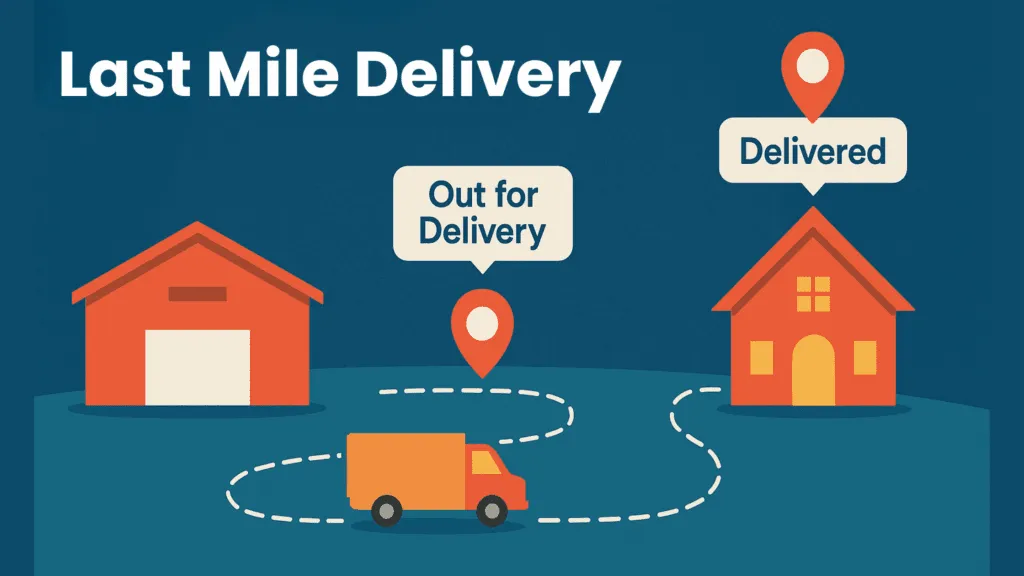
Urban infrastructure represents one of the most significant yet underestimated factors determining delivery speed and efficiency. The quality of roads, availability of parking, density patterns, access restrictions, and emerging technologies fundamentally shape whether a delivery takes 30 minutes or 3 hours. Cities designed for sustainability and walkability create vastly different delivery challenges than sprawling car-dependent regions, requiring fundamentally different logistics strategies.
The Traffic Congestion Challenge: Density and Vehicle Speed Trade-offs
The relationship between urban density and traffic speed reveals a counterintuitive pattern critical for understanding delivery performance. Extremely dense urban areas with populations exceeding 4,000 residents per square mile experience significantly slower average vehicle speeds than suburban areas. Dense cities generate 96,545 vehicle miles per square mile compared to 46,700 in low-density areas, creating traffic intensities more than double their suburban counterparts.
During peak hours, this disparity becomes extreme. High-density areas experience 48% peak-hour delays compared to 23% in low-density suburbs. A delivery in downtown Manhattan or central London faces fundamentally different speed constraints than suburban deliveries, with total vehicle hours per square mile in dense areas reaching 2.6 times the rate of low-density regions. For delivery platforms, this means that geographical location dramatically impacts achievable delivery windows—a company promising 30-minute delivery in dense urban cores faces far greater operational difficulty than one serving suburban areas.
Counterintuitively, this density challenge coexists with the advantage that denser areas support more efficient delivery models. While individual vehicle speeds decrease in dense areas, the proximity of addresses enables deliveries per mile to increase substantially. A delivery driver in a dense neighborhood might complete 10-15 deliveries in an hour despite slower speeds, whereas a suburban driver might complete only 3-4 deliveries at faster speeds but over much longer distances.
The Parking Crisis: Lost Time and Operational Chaos
Parking availability represents the single largest controllable factor undermining urban delivery efficiency. Delivery drivers spend enormous amounts of time simply searching for legal parking spaces to make stops—time that translates directly to delayed deliveries and increased costs. Approximately 50% of total logistics expenses in urban areas concentrate in the last-mile leg, with parking difficulties contributing substantially to this cost concentration.
A groundbreaking Seattle study tested real-time parking information systems providing delivery drivers live curb availability data. The results were dramatic: drivers provided with real-time parking information reduced cruising for parking time by 28% and total driving time on delivery routes by 16%. Put simply: a 2-hour delivery route with poor parking information became a 1.68-hour route with intelligent parking guidance.
The magnitude of this impact reflects parking’s outsized role in delivery operations. Without parking information, drivers spend 50+ seconds per delivery location simply cruising to find legal parking. When drivers target specific curb spaces they know are available, this cruising time drops dramatically. For dense urban areas where parking is scarce and competition fierce, intelligent parking systems represent among the highest-ROI infrastructure investments cities can make for delivery efficiency.
Yet most cities lack systematic parking information systems. San Francisco’s SFpark and Seattle’s OpenPark represent rare exceptions—smart cities implementing real-time sensor data and mobile apps directing drivers to available spaces. Without these systems, drivers resort to circling blocks repeatedly, generating unnecessary vehicle miles, pollution, and congestion.
Low-Emission Zones and Access Restrictions: Regulatory Complexity
The explosion of Low-Emission Zones (LEZs) and Zero-Emission Zones (ZEZs) across global cities introduces profound operational complications for delivery services. Europe forecasts 507 total LEZs by 2025, up 40% from 2019, with restrictions expanding geographically and tightening over time. London’s Ultra-Low Emission Zone (ULEZ), Madrid’s comprehensive LEZ covering the entire municipality, and Rotterdam’s mandatory zero-emission zones for freight exemplify this trend.
These regulations fundamentally alter delivery feasibility. A vehicle legal for delivery in one zone may be banned in another 2 kilometers away, forcing companies to redesign routes, maintain separate fleets by vehicle type, or face hefty fines for violations. A diesel truck compliant in suburban areas might be entirely prohibited in central business districts during certain hours.
The compliance complexity creates cascading operational impacts. Delivery companies must map zones with different restriction timings—some LEZs operate only during business hours, others all day, others with graduated vehicle standards. A single delivery route might traverse multiple zones with conflicting requirements, necessitating either: expensive multi-vehicle operations with drivers switching vehicles at zone boundaries; longer circumnavigating routes avoiding restricted areas; or delivery time windows shifted to off-peak hours when restrictions don’t apply.
Santa Monica’s LEZ pilot demonstrated both opportunity and implementation challenge: participating delivery businesses achieved 50% greenhouse gas emissions reductions and 75% continued using zero-emission vehicles after the pilot ended. Yet achieving this required investment in electric vehicle fleets, charging infrastructure, and revised operational planning—substantial capital commitments beyond many small delivery companies’ budgets.
Urban Consolidation Centers and Microhubs: Infrastructure Innovation
The most transformative infrastructure development for delivery efficiency is the emergence of strategically positioned consolidation centers and microhubs in urban cores. These micro-fulfillment centers (MFCs) and micro-consolidation centers (MCCs) represent a paradigm shift from centralized distribution toward distributed, localized inventory and fulfillment.
Microhubs function as transshipment points where bulk deliveries from regional distribution centers consolidate into smaller, localized shipments completed via sustainable last-mile vehicles (electric vans, cargo bikes, or foot couriers). A delivery truck makes one large consolidated stop at an urban microhub rather than multiple stops across the city, from which packages disperse via efficient last-mile methods.
The efficiency gains are substantial. Retailers implementing microhub networks achieve 30-50% reductions in delivery time compared to regional distribution center fulfillment. Some high-density urban zones achieve sub-2-hour delivery, transforming expectations around delivery speed. A regional grocery chain using in-store microhubs reduced average delivery time from 3 days to under 24 hours, increasing repeat order frequency by 18%.
Last-mile costs decrease dramatically—some grocers report 20-30% reductions in last-mile delivery costs after implementing microhubs. This cost reduction combines multiple factors: shorter delivery distances reducing fuel consumption; smaller delivery vehicles requiring less parking space and compliance; higher stop density enabling more deliveries per driver hour; and reduced vehicle wear-and-tear.
Environmental impacts are equally compelling. By positioning inventory within a few kilometers of final delivery destinations, delivery vehicles travel shorter distances, generating substantially fewer emissions. Microhub-based operations enable complete mode shifts to electric bikes or cargo vehicles—vehicles that function efficiently only for short distances but excel in dense urban environments.
Road Infrastructure Quality: The Rural Delivery Paradox
While dense cities face traffic and parking challenges, rural and remote areas face distinctly different infrastructure constraints: inadequate road networks, poor pavement quality, and limited connectivity. A delivery to a poorly maintained rural road might require 4x the travel time of delivering to an equivalent distance on modern urban highways.
The infrastructure disparity creates divergent delivery economics. Urban density makes short delivery windows economically feasible despite traffic challenges. Rural areas’ poor infrastructure makes quick delivery expensive despite lower traffic congestion. This explains why same-day delivery thrives in dense urban cores but remains unavailable in many rural regions even when customers might be more willing to accept longer delivery windows.
Investment in rural road infrastructure directly impacts delivery capability. Communities improving road quality see delivery times and costs improve substantially—essential for rural e-commerce expansion and economic competitiveness.
Peak-Hour Dynamics and Temporal Infrastructure Constraints
Infrastructure capacity isn’t static—delivery efficiency varies dramatically by time of day. Rush hour congestion dramatically reduces delivery speeds, whereas off-peak hours enable faster operations. Some cities implement “delivery windows” restricting commercial vehicle access during peak hours, forcing deliveries into early morning or evening hours.
This temporal constraint adds complexity to delivery planning. A promise of “2-hour delivery” might require off-peak time windows, limiting customer convenience during high-demand periods. Infrastructure investment—dedicated truck lanes, expanded road capacity, or off-peak enforcement—enables more flexible delivery timing.
London’s congestion charge, while primarily intended for passenger vehicles, inadvertently improved delivery vehicle traffic flow by reducing overall congestion. The charge reduced car trips into central London by approximately 25%, improving conditions for delivery vehicles despite higher congestion charge costs for commercial vehicles.
Technology Solutions Compensating for Infrastructure Gaps
Where physical infrastructure is inadequate, technology increasingly compensates. AI-driven route optimization accounting for real-time traffic, weather, and infrastructure conditions enables delivery planning on minutes-by-minute basis rather than assuming static conditions. Dynamic rerouting redirects drivers around unexpected congestion, accidents, or access restrictions automatically.
Curb management systems like OpenPark represent critical infrastructure innovations—using sensors and apps to convert static parking scarcity into efficiently utilized shared resources. Similar systems managing loading zones and delivery access points maximize utilization of limited infrastructure.
Last-Mile Delivery Cost Structure and Infrastructure Impact
Last-mile delivery accounts for 25-50% of total logistics costs and generates 25% of urban CO₂ emissions in some cities. This disproportionate cost concentration reflects infrastructure challenges: time spent searching for parking, navigating congestion, complying with access restrictions, and managing failed deliveries (requiring redelivery when customers aren’t home or access is impossible).
Infrastructure improvement directly improves this economics. A city implementing parking information systems might reduce per-delivery costs by 10-15% through parking time reductions. Microhub infrastructure enabling cargo bike last-mile reduces costs by 20-30% while improving speed and emissions. LEZ compliance requiring electric vehicles increases upfront costs but reduces operational fuel expenses and benefits from government incentives.
Multi-Modal Integration: Infrastructure Enabling Flexibility
Modern delivery infrastructure increasingly embraces multi-modal solutions—trucks for bulk transport, consolidation at microhubs, then cargo bikes or e-vans for final-mile delivery. This model requires infrastructure supporting mode transitions: adequately sized microhubs, bike parking and charging infrastructure, vehicle sizing appropriate for narrow urban streets.
Cities with robust micro-mobility infrastructure—protected bike lanes, cargo bike parking facilities, e-vehicle charging networks—enable cost-effective sustainable delivery. Conversely, cities without this infrastructure force delivery back to energy-intensive vans or trucks even for short distances.
Public-Private Coordination: Shared Infrastructure Models
Leading cities increasingly implement collaborative frameworks where municipal authorities and delivery operators share infrastructure. Time-segmented loading zones allow multiple carriers to use identical curb space during different hours. Shared microhubs reduce capital requirements by enabling multiple carriers to operate from single facilities. Municipal delivery tracking systems integrate commercial vehicle data with public infrastructure management.
These collaborative models multiply infrastructure efficiency. A shared microhub serving 5 delivery companies operates at higher utilization than would be achievable if each company operated private infrastructure. Time-shared loading zones ensure curbs remain fully utilized throughout the day rather than sitting empty off-peak.
Future Infrastructure Requirements: Preparing for Autonomous Delivery
Emerging autonomous vehicle and drone delivery technologies require fundamentally different infrastructure. Autonomous vehicle operations require precision GPS, continuous connectivity, clear road markings, and complex intersection management. Drone delivery demands airspace management systems, landing pads or rooftop infrastructure, and geofence compliance.
Cities investing in this future infrastructure gain competitive advantage for next-generation delivery services. Conversely, cities with poor digital infrastructure, fragmented airspace governance, or complex regulatory frameworks will struggle to support autonomous delivery deployment.
Summary: Infrastructure as Delivery Competitive Advantage
Urban infrastructure—from parking availability to road quality to LEZ restrictions to microhub presence—fundamentally determines delivery feasibility, speed, and cost. The most delivery-friendly infrastructure combines multiple dimensions: well-maintained road networks, intelligent parking information systems, collaborative public-private loading zone management, strategically positioned microhubs enabling mode shifts to sustainable vehicles, and streamlined access compliance for low-emission fleets.
Cities prioritizing delivery infrastructure efficiency through parking information systems, microhub development, and collaborative logistics frameworks see measurable improvements: 15-30% delivery time reductions, cost decreases of 20-30%, emissions reductions of 25-50%, and dramatically improved customer satisfaction. Conversely, cities neglecting delivery infrastructure through restrictive access policies without sustainable alternatives, inadequate parking management, and lack of microhub development face deteriorating delivery reliability, increased costs, and congestion—ultimately harming both delivery companies and the residents they serve. The most successful urban logistics strategies recognize delivery infrastructure not as an afterthought but as critical community asset essential for economic vitality, environmental sustainability, and livable cities.